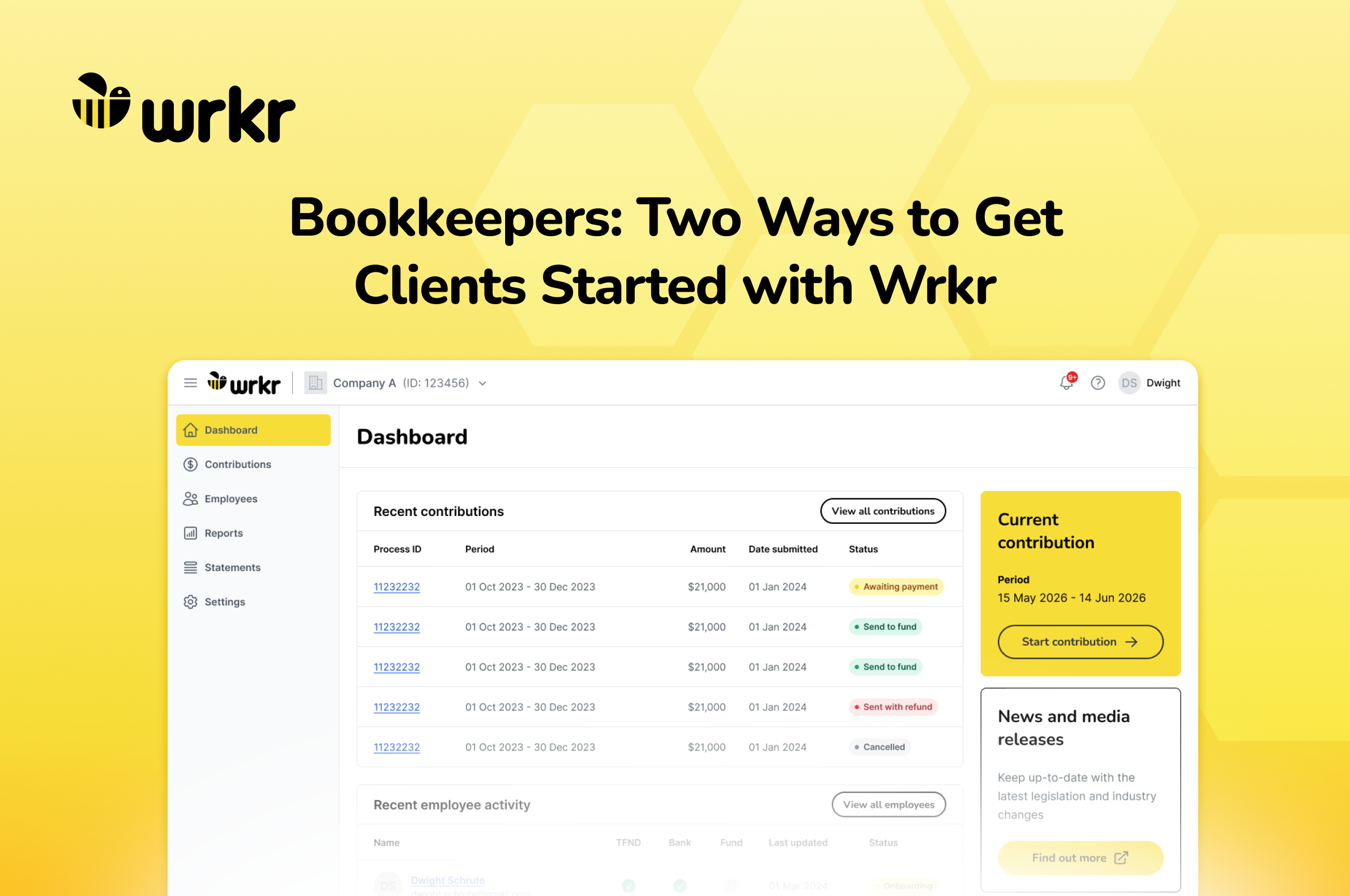
If you are integrating Wrkr with a payroll provider, your provider may already be integrated with us. Please refer to this guide for more information.
If your payroll provider is not one of the ones listed in the guide, you can proceed to sign up for Wrkr.


The Small Business Guide to Payday Super
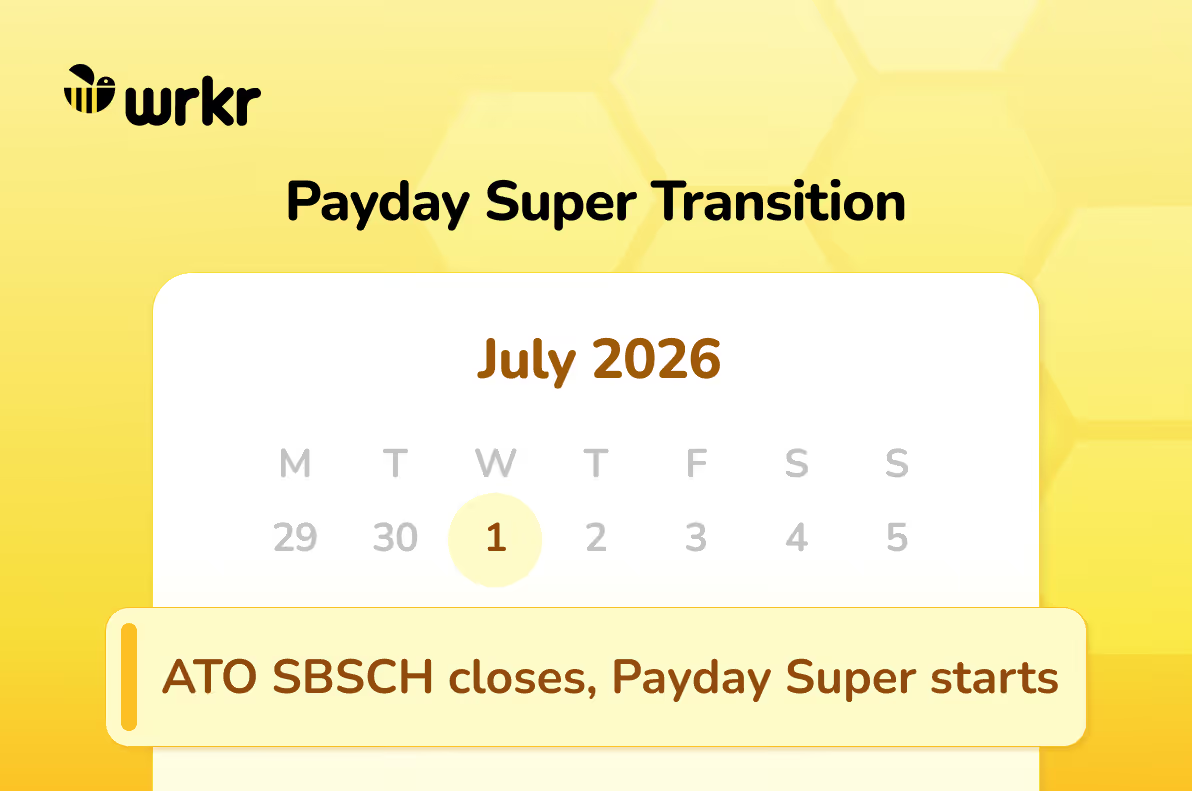
From 1 July 2026, Australian employers will need to pay superannuation contributions closer to payday as part of the Federal Government's Payday Super reforms.
At the same time, the ATO Small Business Superannuation Clearing House (SBSCH) will close on 30 June 2026, meaning businesses that currently rely on the SBSCH will need to transition to an alternative solution.
For many small businesses, bookkeepers and BAS agents, these changes represent the biggest shift to superannuation administration in years.
To help you prepare, we've created The Small Business Guide to Payday Super a practical resource designed to explain the changes and help businesses take the next steps with confidence.
Why Small Businesses Should Start Preparing Now
Businesses currently using the ATO SBSCH will need to:
- Select a replacement clearing solution
- Review employee super fund information
- Update internal payroll and payment processes
- Ensure bookkeepers, payroll teams and advisers are aligned
- Become familiar with more frequent contribution requirements
Starting now can help reduce disruption and make the transition significantly smoother.
What's Inside the Guide?
- What Payday Super means for your business
- Key changes from 1 July 2026
- Why businesses should start preparing now
- What to look for in a super clearing solution
- Steps to make the transition easier
- How bookkeepers and advisers can help
Get Your Free Guide
Whether you're a small business owner, bookkeeper or BAS agent, this guide will help you understand the upcoming changes and prepare for a smooth transition to Payday Super.
This means super becomes part of your regular payroll process. You’ll need a system that can handle frequent submissions, maintain accurate employee data, and provide visibility over payment status, not just at quarter end.
A centralised approach, with multi-entity access, bulk processing, and clear visibility over submissions, fund receipt, and any issues, becomes critical to keeping things running smoothly.